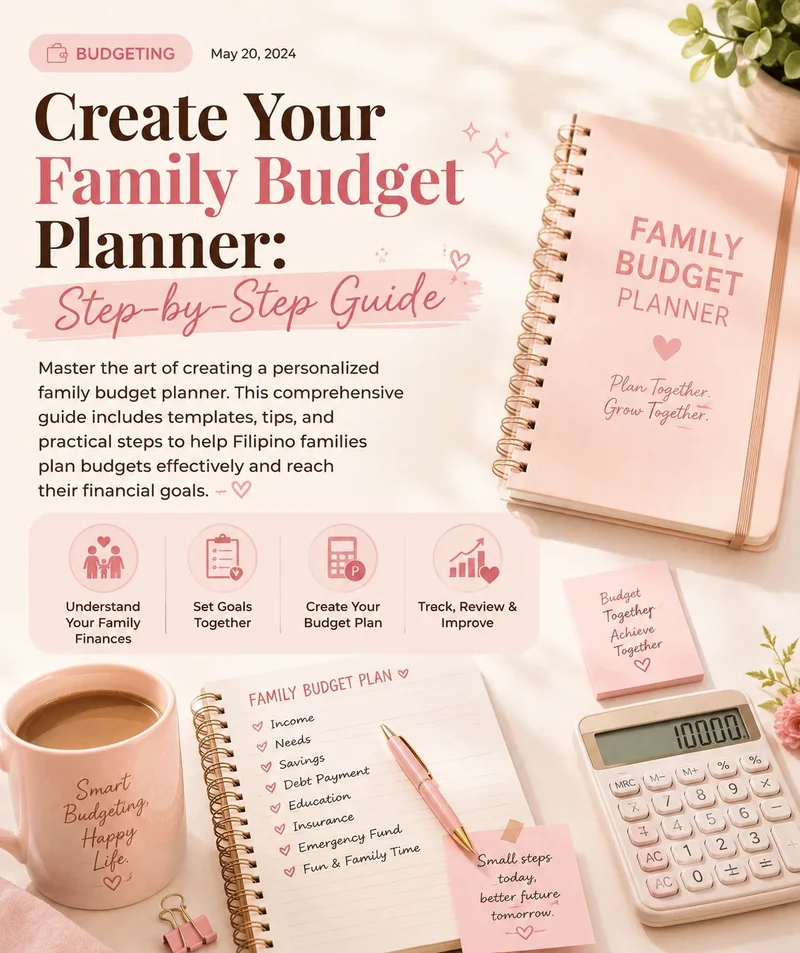
Creating a family budget planner is one of the most powerful financial decisions you can make. When you have a clear, written plan for your money, you move from reactive spending to proactive financial management. This guide will show you exactly how to build a personalized family budget planner that actually works for your household.
Whether you're earning ₱40,000 or ₱400,000 per month, the principles of effective budget planning remain the same. You need clarity, structure, and flexibility. In this comprehensive guide, you'll learn how to create a budget planner system that your entire family can use and understand.
Quick Summary
- A family budget planner organizes income and expenses into categories for better control
- Start by calculating total household income and tracking current spending patterns
- Allocate money using the 50/30/20 rule or customize based on your family needs
- Review and adjust your budget monthly for continuous improvement
Why Every Family Needs a Budget Planner
Many Filipino families manage money by paying bills as they arrive and spending what's left. This approach leaves you vulnerable to financial stress, debt, and missed savings opportunities. A budget planner changes everything.
A written budget planner:
- Prevents overspending by setting clear limits for each category
- Increases savings by allocating money intentionally toward financial goals
- Reduces financial stress because you always know where your money is going
- Enables better decisions by showing you trade-offs (e.g., "If we spend more on dining out, we save less")
- Unites your family around shared financial goals and priorities
- Builds financial confidence by proving you can manage money effectively
Research shows that families with written budgets save 20-40% more than families without. The act of writing down your plan creates psychological commitment and clarity.
Step 1: Calculate Your Total Household Income
Before you allocate money, you need to know exactly how much money comes into your household each month. This seems simple, but many families underestimate their income or forget about side hustles and irregular money.
Primary Income Sources
Start with your main income:
- Your salary (after tax and deductions)
- Your partner's salary (after tax and deductions)
- Any additional employment income
Use your actual take-home pay, not your gross salary. That's what you actually have available to budget.
Additional Income
Don't forget these sources:
- Side hustles: Freelance work, online selling, tuition, consulting
- Regular bonuses: 13th month pay, performance bonuses, commission
- Allowances from family: Support from parents or relatives
- Irregular income: Rental income, investment returns, occasional extra work
Important: For irregular income (side hustles, bonuses), be conservative. Use your average monthly amount or even 50-70% of what you typically earn. This ensures your budget remains realistic during slower months.
Calculate Your Monthly Income
Add all your income sources to get your total monthly household income. Write this number down—it's the foundation of your entire budget.
Example: If your salary is ₱50,000 and your partner earns ₱30,000, with occasional side income of ₱5,000, your total monthly income is approximately ₱80,000 to ₱85,000.
Step 2: Track Your Current Spending (The Audit)
Before you create your ideal budget, you need to know where your money currently goes. Many families are shocked when they realize how much they spend on discretionary categories.
How to Track Your Spending
Spend 2-4 weeks tracking every peso you spend. Use a simple method:
- Notebook method: Carry a small notebook and write down purchases
- Phone notes: Use your phone's notes app to record daily spending
- App tracking: Use a budgeting app to log expenses
- Receipt collection: Keep all receipts and log them weekly
The tracking method doesn't matter—what matters is capturing your actual spending patterns. Be honest about everything: coffee, snacks, impulse purchases, online shopping, all of it.
Categorize Your Spending
After tracking, group your spending into categories. Common categories include:
- Groceries & food
- Dining out & coffee
- Utilities & household
- Transportation
- Education
- Entertainment & leisure
- Personal care
- Clothing & shopping
- Insurance & medical
- Savings
Calculate your average monthly spending in each category. This "baseline spending audit" is crucial—your budget will be based on this data.
Pro Tip: The Audit Surprise
You'll likely discover you spend way more on specific categories than you realized. Don't be discouraged—this is the most valuable insight you can have. This data is what allows you to make real changes.
Step 3: Choose Your Budget Allocation Method
Now that you know your income and current spending, it's time to create your ideal budget. You have several approaches to choose from.
The 50/30/20 Rule (Easiest)
This is the most popular method for beginners:
- 50% for Needs (essentials like housing, food, utilities, transportation, insurance)
- 30% for Wants (discretionary spending like dining out, entertainment, hobbies)
- 20% for Savings (including emergency fund, debt repayment, future goals)
If your monthly income is ₱80,000:
- Needs: ₱40,000
- Wants: ₱24,000
- Savings: ₱16,000
This method is simple and balanced. However, many Filipino families find 20% savings is ambitious initially, especially with tight incomes.
The 70/20/10 Rule (For Tighter Budgets)
If your income is limited or you have high debts:
- 70% for Needs and fixed debt payments
- 20% for Wants (discretionary spending)
- 10% for Savings (even small amounts help)
This acknowledges the reality that some families must prioritize essentials. As your income grows, you can shift toward 50/30/20.
The 80/20 Rule (Ultra Simple)
Spend 80% of your income and save 20%. Let your actual expenses fall where they may within the 80%.
This works well if you dislike detailed categorization but want automatic savings.
Custom Allocation (Most Effective)
Use your spending audit data to create a custom allocation based on your actual lifestyle:
- List all your spending categories from your audit
- Calculate what percentage of income each represents
- Identify categories you want to reduce or increase
- Build your allocation around your actual priorities
For example: "Our family prioritizes education (25%), so we'll use: Needs 45%, Education 25%, Wants 20%, Savings 10%."
Recommendation: Start with 50/30/20. If your current spending doesn't fit this, adjust realistically. As you build discipline, gradually shift more toward savings.
Step 4: Create Your Budget Line Items
Now you'll break down each major category into specific line items with allocated amounts.
Essential Needs (50% of budget)
List every essential expense:
- Housing (rent/mortgage): ₱_____
- Groceries & food: ₱_____
- Utilities (electricity, water, internet): ₱_____
- Transportation (gas, public transit): ₱_____
- Insurance (health, car, life): ₱_____
- Childcare: ₱_____
- Phone: ₱_____
- School fees (if not separate category): ₱_____
Use your audit data as a starting point. Round up slightly to account for price increases.
Discretionary Wants (30% of budget)
These are non-essential but make life enjoyable:
- Dining out & coffee: ₱_____
- Entertainment & movies: ₱_____
- Shopping & clothing: ₱_____
- Hobbies & personal interests: ₱_____
- Subscriptions: ₱_____
- Beauty & personal care: ₱_____
- Gifts: ₱_____
Be realistic. If you currently spend ₱8,000 monthly on dining out, allocating ₱2,000 will fail. Instead, set a realistic target like ₱5,000 initially, then work toward reducing it.
Savings Goals (20% of budget)
Allocate your savings strategically:
- Emergency fund: ₱_____ (until you have 3-6 months of expenses)
- Short-term goals (within 1 year): ₱_____
- Long-term goals (1-5 years): ₱_____
- Retirement savings: ₱_____
- Debt repayment: ₱_____ (if applicable)
Important: Even saving ₱5,000-₱10,000 monthly changes your financial life in 5 years. Start small and grow as you reduce discretionary spending.
Step 5: Choose Your Planning Tool & Format
You need a system to track your budget. Options include:
Spreadsheet Budget (Most Flexible)
Create a simple Excel or Google Sheets template:
- Column A: Category
- Column B: Budgeted Amount
- Column C: Actual Spending
- Column D: Difference (Over/Under)
Create a new sheet for each month. This gives you month-by-month data to identify trends.
Physical Budget Planner
Many families prefer pen-and-paper:
- Get a budget planner notebook or binder
- Write your categories and amounts on a monthly page
- Track spending by hand
- Review monthly and write notes
The physical act of writing increases engagement and habit formation.
Budgeting Apps
Digital options include:
- Google Sheets: Free, customizable, accessible anywhere
- YNAB (You Need A Budget): Powerful, subscription-based
- Wave: Free budgeting tool with good reporting
- Local apps: Many Philippines-based budgeting apps exist
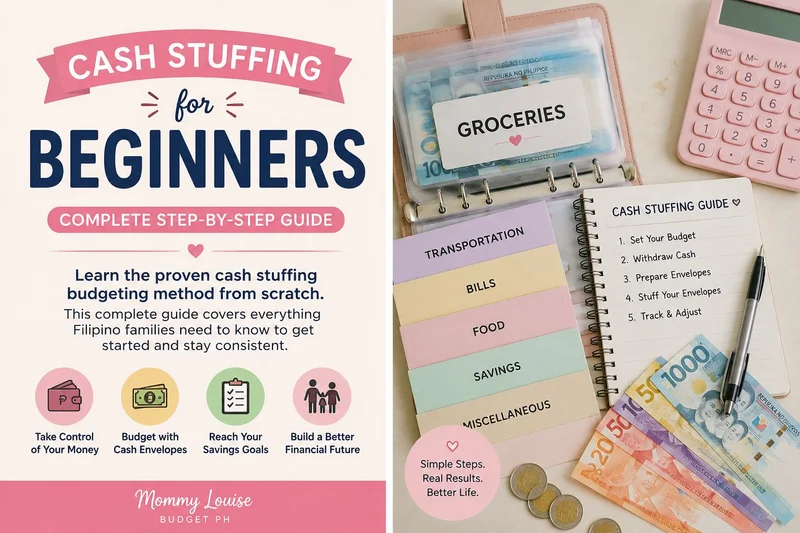
Envelope System (If Using Cash)
Physical or digital envelopes matching your budget categories. This is especially effective for controlling discretionary spending.
Recommendation: Start with a simple spreadsheet or physical planner. Once you're comfortable with budgeting, upgrade to an app if desired.
Step 6: Implement & Review Monthly
Creating the plan is just the beginning. Implementation makes it real.
Month 1: Implement
Start your budget plan on a payday or the first of the month. Allocate your income according to your plan. Track your spending daily or weekly. Don't be perfect—just be consistent.
Weeks 2-3: Adjust as Needed
Reality will probably differ from your plan. Some categories will overshoot. That's normal. Make small adjustments as needed, but don't abandon the budget.
End of Month 1: Review & Learn
Compare your budgeted amounts to actual spending. Ask:
- Where did I spend more than budgeted? Why?
- Which allocations were realistic?
- Which categories need adjustment?
- What surprised me about my spending?
Months 2+: Refine
Adjust your plan based on month 1 data. Most families need 2-3 months to finalize their budget. After that, you'll have a realistic, working system.
Budget Planning Tip
Schedule a monthly "money date" with your family. Review the budget, celebrate progress, and discuss adjustments. This keeps everyone aligned and motivated.
Common Mistakes in Budget Planning
Mistake #1: Unrealistic Allocations
If you spend ₱10,000 on dining out monthly, don't allocate ₱2,000 and expect it to work. Start with your actual spending and gradually reduce with specific strategies.
Mistake #2: Forgetting Irregular Expenses
Car maintenance, annual insurance, home repairs, and birthday gifts are easy to forget. Create a sinking fund (saving monthly for irregular expenses) to handle these without derailing your budget.
Mistake #3: Too Many Categories
More than 12-15 categories becomes overwhelming. Keep it simple with broad categories, then subdivide if needed after you're comfortable.
Mistake #4: Setting Savings Too High
If your budget requires saving ₱20,000 monthly but you can only realistically save ₱5,000, you'll fail. Start with realistic savings and increase as you cut spending.
Mistake #5: Not Reviewing Monthly
A budget isn't set-and-forget. Monthly review takes 15-30 minutes and prevents drift. Skip this and your budget becomes useless.
Special Situations in Family Budget Planning
Single Income Households
One earner means less flexibility. Prioritize: essentials (60-65%), discretionary (15-20%), savings (15-20%). Focus on increasing income through side hustles or career advancement.
Dual Income Households
Decide: Will you merge budgets or maintain separate spending allowances? Many couples use "yours, mine, and ours" where some money is combined (shared expenses, savings) and some is separate (personal discretionary).
Irregular Income (Self-Employed, Freelancers)
Base your budget on your lowest earning month. When you earn more, allocate 50% to increasing savings and 50% to discretionary/contingency.
Large Families
Scale your needs budget accordingly, but the 50/30/20 rule still applies. Focus on bulk buying, meal planning, and strategic shopping to keep food costs reasonable.
Getting Started This Week
Ready to build your family budget planner? Here's your action plan:
- Today: Calculate your total monthly household income
- This week: Track all spending for 3-5 days to identify patterns
- Weekend: Choose your budget allocation method (50/30/20 recommended)
- Next week: Create your detailed budget line items
- Next payday: Implement your budget and start tracking
- End of month: Review, learn, and adjust for month 2
A budget planner transforms vague financial anxiety into clear, actionable plans. You move from "I hope I have enough" to "I know I have enough because I planned for it." That confidence alone is worth the effort.
Next Steps to Optimize Your Budget
Once you have your basic budget planner working, deepen your financial management:
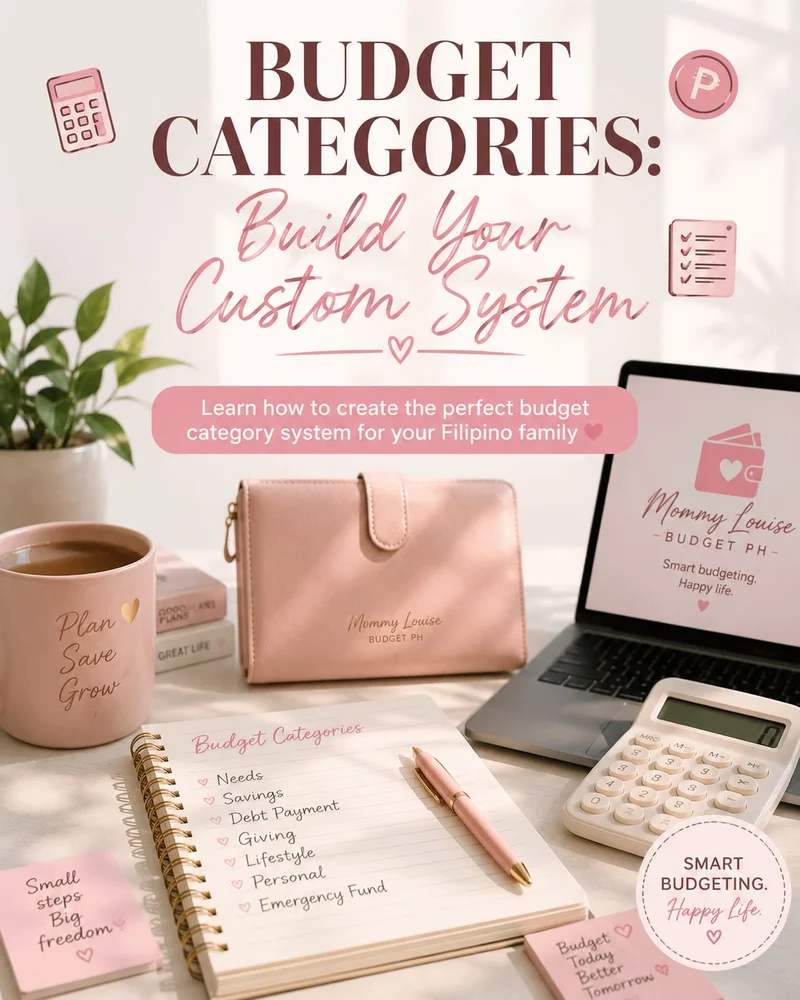
- Budget Categories: Build Your Custom System - Dive deeper into categorization
- Cash Stuffing for Beginners - Implement the envelope method
- The 100k Savings Challenge - Set and achieve major goals
Your family deserves financial clarity and confidence. A budget planner is the first step toward building both.