The cash stuffing method has transformed how thousands of Filipino families manage their household finances. If you're tired of overspending, confused about where your money goes, or struggling to save, this guide will show you exactly how to get started with this proven budgeting system.
In this comprehensive guide, you'll learn the complete cash stuffing method from scratch, including how to set up your categories, organize your envelopes, and build lasting money habits that lead to financial freedom.
Quick Summary for Busy Moms
- Cash stuffing = dividing income into labeled envelopes by category
- Better than digital budgeting because it's visual and prevents overspending
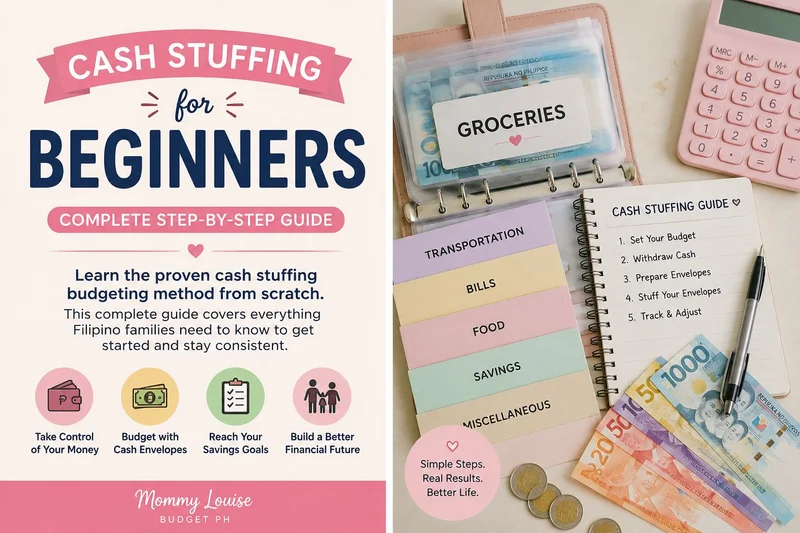
- Follow 4 simple steps: choose categories, allocate funds, get envelopes, track spending
- See real results in 4 weeks; significant savings within 3 months
What Is Cash Stuffing & How Does It Work?
Cash stuffing is a hands-on budgeting method where you physically divide your monthly income into labeled envelopes (or digital categories) for different spending purposes. Instead of tracking expenses digitally or using a spreadsheet, you see your money in front of you.
Here's what makes it so effective:
- Visual feedback: You immediately see how much money is left in each envelope
- Behavioral change: When an envelope is empty, you stop spending. No temptation to overspend.
- Simplicity: No complicated apps or budget formulas to memorize
- Psychological satisfaction: Physically handling cash creates a stronger connection to your money
- Family involvement: Everyone can see the budget and understand financial priorities
The cash stuffing method works because it leverages behavioral psychology. Studies show that people spend more when using credit cards versus cash. When you physically see your limited cash supply, you make more intentional purchasing decisions.
Why Cash Stuffing Works Better Than Digital Budgeting
While digital budgeting apps have their place, cash stuffing offers unique advantages that digital tools simply cannot replicate:
1. Immediate Visual Awareness
Looking at your phone to check your budget balance is different from opening an envelope and seeing less cash than last week. The visual and tactile experience of handling physical money creates a stronger psychological impact on your spending behavior.
2. Prevents Overspending Automatically
With digital budgets, it's easy to convince yourself to "borrow" from another category. With physical envelopes, the money is simply not available. This automatic limitation keeps you accountable without willpower.
3. No Monthly Reconciliation Stress
Digital budgets often require monthly reviews and reconciliations. Cash stuffing is simpler: when the envelope is empty, you're done spending in that category. The system reconciles itself.
4. Works for Families with Mixed Financial Habits
If you have a family member who struggles with budgeting, seeing physical cash limitations is more impactful than explaining digital budget constraints. Teenagers especially benefit from this tangible system.
5. Reduces Financial Anxiety
Knowing exactly how much money you have available for each purpose reduces financial stress. No wondering if you have enough for groceries or utilities—the answer is in front of you.
Pro Tip
Start with physical cash envelopes if this is your first time—the tactile experience reinforces behavior change more effectively than digital tracking. Once you've built the habit (3-4 months), you can transition to digital if you prefer.
The 4-Step Cash Stuffing Process
Step 1: Choose Your Budget Categories
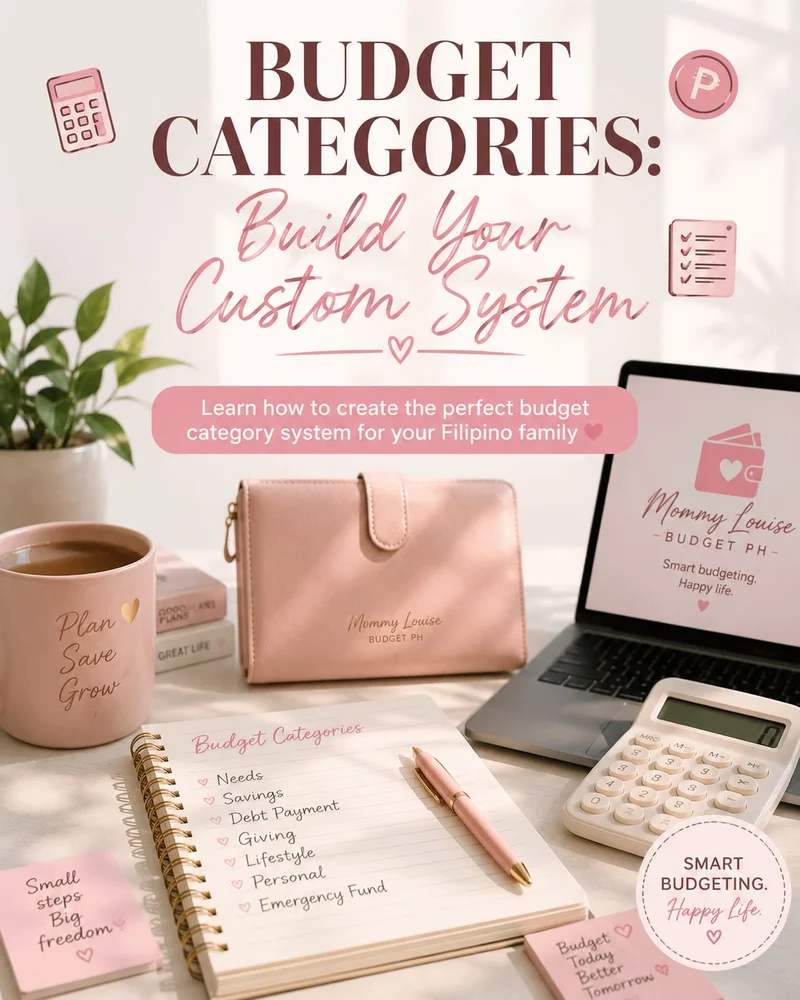
The first step is identifying your spending categories. Common categories for Filipino households include:
- Groceries & food
- Utilities (electricity, water, internet)
- LPG & cooking fuel
- School allowances & education
- Transportation
- Insurance & medical
- Savings & emergency fund
- Giving & charitable giving
- Self-care & personal items
- Entertainment & dining out
- Household maintenance
- Clothing & personal shopping
Your categories should reflect your actual spending patterns and family priorities. Don't create categories you won't use. Start with 8-12 main categories and adjust after the first month based on your actual expenses.
Pro tip: Our budget design gallery has templates showing different category combinations that work for real Filipino families. You can use these as inspiration to customize your own system.
Step 2: Determine Your Budget Allocation
Now assign a percentage or amount of your monthly income to each category. A simple approach is:
- 50% - Essential expenses (groceries, utilities, rent, transportation)
- 30% - Discretionary spending (entertainment, dining out, shopping)
- 20% - Savings & debt repayment
But this is flexible. If your income is tight, you might do 70/10/20. The key is being realistic about your actual needs.
Important: Your allocation should total 100% of your income or slightly less. You want some buffer for unexpected expenses or opportunities to increase savings.
Step 3: Get Your Budget Envelopes & Labels
You have two options here:
Option 1: Physical envelopes - Traditional cash envelopes or a binder system. Many families love the aesthetic appeal and enjoy decorating their envelopes. You can get beautiful, pre-made envelope sets or make your own.
Option 2: Digital envelopes - Use our Louise ExpenseDesk app to create digital envelope categories and track spending electronically. This is convenient if you use mostly online banking or credit cards but want the cash stuffing psychology.
We recommend starting with physical envelopes if this is your first time, as the tactile experience reinforces the behavior change. Once you've built the habit, you can transition to a hybrid approach.
Get started: Browse our budget envelope collections for beautiful templates designed specifically for Filipino families.
Step 4: Stuff Your Envelopes & Track Spending
When you receive your monthly income:
- Withdraw cash in the amounts you allocated to each category
- Distribute the cash into your labeled envelopes
- Keep envelopes in a safe place at home
- Use the cash from each envelope for that category's expenses
- Track what you spent (optional, but recommended)
- At month-end, evaluate what's left and adjust for next month
The tracking doesn't need to be complicated. A simple note in each envelope or a simple tracker is enough. The main goal is learning your spending patterns and making intentional adjustments.
How to Handle Multiple Income Sources & Irregular Income
Cash stuffing works great even if you have multiple income sources or irregular income:
Multiple incomes: Combine all household income into one pool, then allocate according to your budget. This works especially well for couples where both earn income.
Irregular income: Base your envelope amounts on your minimum guaranteed monthly income (e.g., salary). When you receive extra income (bonus, side hustle, overtime), decide in advance how to allocate it: 50% to savings, 50% to discretionary spending, for example.
Side hustles: Many Moms using cash stuffing have side incomes. Consider keeping side hustle income separate and allocating it directly to savings goals or special projects. This encourages the side hustle without disrupting your regular budget.
Budget Tip: Side Hustle Strategy
If you earn extra income from a side business or freelance work, allocate 50% to savings and 50% to discretionary spending. This automatically prevents lifestyle inflation while rewarding you for the extra effort.
Cash Stuffing for Couples: Making It Work Together
If you're married or in a partnership, discuss your financial priorities before setting up cash stuffing. Couples should:
- Decide together on categories and allocations
- Define roles (who manages which envelopes, who tracks spending)
- Have a monthly "money date" to review progress and adjust
- Agree on what counts as discretionary vs. essential spending
- Discuss major purchases before making them
Many couples find that the cash stuffing system actually improves communication about money. Instead of hidden spending or arguments about "where the money went," you're working together toward shared goals.
Common Cash Stuffing Mistakes to Avoid
Mistake #1: Too Many Categories
Starting with 15+ categories makes the system overwhelming. Begin with 8-12 main categories. You can add specialized categories (like "pet expenses" or "vehicle maintenance") once you're comfortable with the basics.
Mistake #2: Unrealistic Budget Amounts
If you allocate ₱2,000 to groceries but your family actually spends ₱5,000, your system will fail. Track your actual spending for a month first, then create realistic allocations. You can always adjust downward with specific strategies once you understand the baseline.
Mistake #3: Not Accounting for Irregular Expenses
Some expenses don't happen monthly (car maintenance, annual insurance, home repairs). Create a "sinking fund" envelope where you save a small amount monthly for these irregular expenses. When they occur, you have the money ready without derailing your budget.
Mistake #4: Giving Up Too Soon
It takes 3-4 weeks to build a new habit. By week 2, cash stuffing might feel annoying or restrictive. This is normal. Stick with it for at least 30 days before deciding if it's working for you.
Mistake #5: Being Too Rigid
Cash stuffing is a framework, not a prison. If you run out of money in the groceries envelope because prices increased, it's okay to adjust. The system should reduce stress, not create it. Be flexible while maintaining the core principle of intentional spending.
How Long Until You See Results?
Most families notice improvements within the first month:
Week 1: Novelty effect. You're excited about the system and actively watching your spending.
Week 2-3: Reality sets in. You realize some allocations were unrealistic, or you feel the limitation of the system. This is normal and temporary.
Week 4: Habits start forming. You naturally think about categories before spending. You feel good about not overspending.
Month 2-3: Real behavior change. You're now making intentional spending decisions without as much conscious effort. Savings may increase noticeably.
Month 6+: The system becomes automatic. You'll have clear data on what works, and you can optimize further. Many families report 20-40% increase in savings by this point.
Frequently Asked Questions About Cash Stuffing
Is cash stuffing safe? What if I lose the envelopes?
It's reasonable to worry about safety. Keep your envelopes in a secure place—a home safe, locked drawer, or safe deposit box if you're managing very large amounts. Some families keep only a week's worth of cash accessible and store the rest securely. You could also use digital envelopes for the bulk of your savings and only keep spending money in physical envelopes.
Can I use a credit card instead of cash?
Technically yes, but it's less effective. The whole point of cash stuffing is the behavioral change that comes from using physical cash. If you're using a credit card, you lose the immediate feedback mechanism. However, if you must use a card, you can still use the envelope concept by creating spending limits per category on your card and tracking strictly.
What if I have a financial emergency mid-month?
This is where building an emergency fund is crucial. Set aside 3-6 months of expenses in a separate emergency fund envelope that you don't touch unless there's a true emergency. Define what constitutes an emergency so you don't raid this fund for non-essentials.
How do I handle bills that come quarterly or annually?
Create a "quarterly bills" or "annual bills" sinking fund. If your insurance is ₱3,000 per quarter, set aside ₱1,000 monthly in this envelope. When the quarterly bill arrives, you have the money ready.
Can I use cash stuffing with online banking?
Absolutely. Many people create digital envelopes or sub-accounts at their bank and use the same allocation principles. The psychology isn't quite the same as physical cash, but the system still works. Some people use a hybrid approach: physical envelopes for daily spending categories and digital accounts for savings and bills.
Getting Started This Month
Ready to transform your family finances? Here's your action plan:
- This week: Track your spending for 3-4 days to understand your baseline
- Next step: List your budget categories (8-12 maximum)
- Then: Calculate realistic monthly allocations based on your income and actual spending
- Get supplies: Browse our budget envelope collections or design your own
- Implement: Start cash stuffing on the first of next month or on your next payday
- Track: Use a simple tracker to record spending in each category
- Review: After one month, evaluate what worked and adjust categories/amounts
Cash stuffing isn't complicated, but it does require intentionality. The good news? Thousands of families have used this method to save thousands of pesos, eliminate debt, and build financial confidence. You can too.
Next Steps
Want to dive deeper into specific aspects of cash stuffing? Check out our related articles:
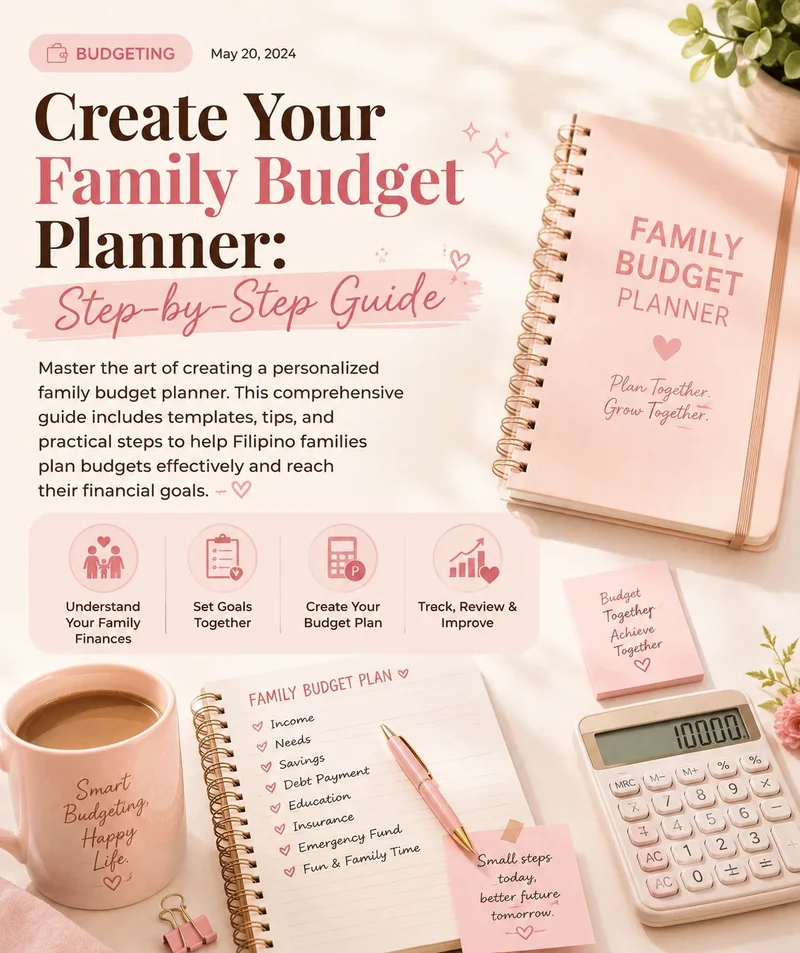
- Create Your Family Budget Planner: Step-by-Step Guide
- Budget Categories: Build Your Custom System
- The 100k Savings Challenge: Complete Guide
And if you're ready to get beautiful, customizable budget templates designed for Filipino families, shop our budget envelope collections or browse our design gallery for inspiration.
Remember: The best budget is the one you'll actually use. Cash stuffing works because it's simple, visual, and effective. Give it 30 days and see how it transforms your relationship with money.