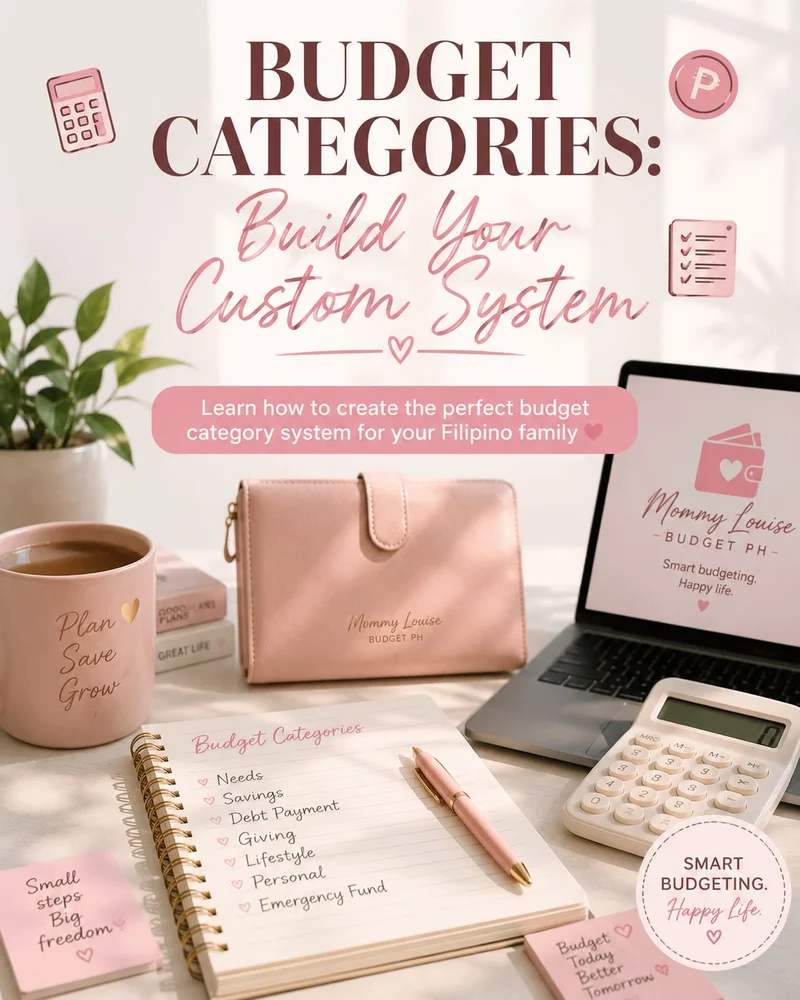
Your budget categories are the foundation of your entire financial system. They determine how you see your money, where you focus your attention, and ultimately how effectively you control your finances. Yet many families use random or overly complicated category systems that don't match their actual life.
This guide shows you how to design a custom budget category system perfectly suited to your Filipino family's unique needs, spending patterns, and financial priorities.
Quick Summary
- Budget categories help you track and control specific spending areas
- Start with 8-12 main categories; too many becomes overwhelming
- Common categories: essentials, education, savings, discretionary
- Customize based on your family's unique spending patterns and priorities
Why Budget Categories Matter More Than You Think
Budget categories aren't just organizational—they shape your financial behavior. The categories you create determine what you notice, measure, and ultimately control.
For example:
- If "dining out" is separate from "groceries," you're more aware of discretionary food spending
- If you track "shopping" separately, you notice retail habits better than bundling it into "other"
- If you have a dedicated "family activities" category, you're more intentional about recreation spending
Poor category design leads to:
- Overspending in blurry categories (like "miscellaneous")
- Not noticing problem areas until too late
- Difficulty making informed trade-offs
- Family disagreements about where money went
Good category design creates clarity, accountability, and smarter spending decisions.
The Standard Budget Categories Framework
Most successful Filipino families use variations of these core categories:
Essential Expenses (50% of budget)
Non-negotiable expenses required for basic living:
- Housing: Rent or mortgage payment
- Groceries & Food at Home: Everyday meal ingredients
- Utilities: Electricity, water, internet, phone, LPG/cooking fuel
- Transportation: Gas, public transit, car payment, insurance, maintenance
- Insurance: Health insurance, life insurance, car insurance
- Education: School tuition, supplies, books
- Childcare: Daycare, nanny (if applicable)
- Debt Payments: Credit card minimums, loans
These expenses must happen. Your goal isn't to eliminate them but to ensure they're realistic and necessary.
Discretionary/Lifestyle Spending (30% of budget)
Non-essential but quality-of-life spending:
- Dining Out & Coffee: Restaurants, fast food, coffee shops
- Entertainment: Movies, concerts, games, hobbies
- Shopping & Clothing: Apparel, shoes, personal items
- Subscriptions: Streaming services, apps, memberships
- Personal Care: Haircut, spa, gym, beauty products
- Recreation & Activities: Family outings, travel, sports
- Gifts & Special Occasions: Birthdays, holidays, celebrations
These bring joy and quality to life. The goal is intentional spending, not elimination.
Savings & Financial Goals (20% of budget)
Building your financial future:
- Emergency Fund: Liquid savings for unexpected expenses
- Short-Term Goals: Vacation, new furniture, appliances (within 1 year)
- Medium-Term Goals: Car down payment, home renovation (1-5 years)
- Long-Term Goals: Retirement, house purchase, college fund (5+ years)
- Debt Repayment Beyond Minimums: Accelerating loan payoff
Treat savings as a non-negotiable expense, not what's left over after spending.
Common Budget Categories for Filipino Families
Beyond the big three, here are detailed categories many families find useful:
Housing-Related Categories
- Rent/Mortgage: Monthly housing payment
- Property Tax: Annual barangay/local taxes
- Home Maintenance: Repairs, cleaning supplies, tools
- Home Improvement: Renovations, furniture (planned spending)
Food & Nutrition
- Groceries: Everyday food shopping
- Dining Out: Restaurants, fast food, food delivery
- Coffee & Snacks: Separate tracking if significant
- Special Meals: Catering, takeout for events
Transportation
- Car Payment: Auto loan if applicable
- Gas/Fuel: Vehicle fuel costs
- Public Transit: Jeepney, bus, taxi, Grab fares
- Vehicle Maintenance: Oil changes, repairs, insurance
- Parking: Monthly parking, toll roads
Utilities & Services
- Electricity: Monthly power bill
- Water & Sewage: Monthly water service
- Internet & Phone: Broadband, mobile plans
- Gas/LPG: Cooking fuel
- Garbage & Services: Trash collection, hired help
Family & Child-Related
- School Tuition: Monthly school fees
- School Supplies: Books, uniforms, materials
- Childcare: Daycare, nanny, babysitter
- Kids Activities: Sports, music lessons, camps
- Baby Products: Diapers, formula, baby items
Health & Wellness
- Health Insurance: Monthly insurance premium
- Medical Expenses: Doctor visits, medication, dental
- Gym & Fitness: Membership, classes, equipment
- Vitamins & Supplements: Health products
Personal & Entertainment
- Clothing & Shoes: Apparel purchases
- Personal Care: Haircut, salon, beauty products
- Entertainment: Movies, concerts, events
- Hobbies: Specific hobby-related spending
- Recreation: Family outings, weekend trips
- Subscriptions: Streaming, apps, memberships
Family & Giving
- Gifts: Birthday, holiday, special occasion gifts
- Family Support: Help for relatives, extended family (common in Filipino culture)
- Charitable Giving: Church donations, community help
Special Filipino Categories
These categories reflect unique aspects of Filipino family life:
- Family Gatherings: Fiestas, reunions, celebrations
- Remittances: Money sent to provincial family members
- Godparents/Ninang/Ninong Gifts: Expected gifts for life events
- Religious Giving: Church tithes, donations, religious events
- Allowance for Extended Family: Regular support to parents or siblings
Pro Tip: Category Visibility
Create separate budget categories for any spending area where you want more awareness or control. If "entertainment" is too broad and you can't track it effectively, split it into "movies," "dining out," and "activities." Visibility leads to control.
How to Choose Your Personal Category System
Step 1: Identify Your Spending Patterns
Review your actual spending for 2-4 weeks and list every category where you spent money. Don't filter—just list what's real.
Do you see:
- High spending in categories you didn't realize?
- Multiple small purchases in one area (suggests it needs its own category)?
- Categories you don't actually use?
Step 2: Group by Priority
Which categories matter most to your family? For many Filipino families:
- Education is high priority (deserve larger allocation)
- Family support is important (needs dedicated category)
- Food is significant (might need multiple sub-categories)
Make these visible in your category structure.
Step 3: Create Main Categories (8-12)
Start broad. Example system:
- Housing (rent/mortgage)
- Food & Groceries
- Utilities & Services
- Transportation
- Education
- Health & Insurance
- Personal & Entertainment
- Family & Giving
- Savings & Goals
This 9-category system works for most families. Add special categories (like "Family Support" or "Religious Giving") if they're significant for you.
Step 4: Create Sub-Categories (Optional)
Under each main category, you might track:
Transportation:
- Gas
- Public transit
- Maintenance
- Parking/tolls
Sub-categories help you understand where money goes within each main area. Use them if you want that level of detail, but keep it reasonable (max 4-5 sub-categories per main category).
Step 5: Test & Refine
Implement your category system for one month. Ask:
- Were there transactions that didn't fit clearly?
- Were any categories unused?
- Did any category feel too broad or too narrow?
- Did this system match how your family actually spends?
Adjust and try again. By month 3, you'll have a system that works perfectly for you.
Budget Allocation Percentages by Category
Here's a realistic allocation framework for Filipino families with ₱50,000-₱100,000 monthly income:
| Category | % of Income | Example (₱80K) |
|---|---|---|
| Housing | 25-35% | ₱20,000-₱28,000 |
| Food & Groceries | 12-18% | ₱9,600-₱14,400 |
| Utilities & Services | 8-12% | ₱6,400-₱9,600 |
| Transportation | 5-10% | ₱4,000-₱8,000 |
| Education | 5-15% | ₱4,000-₱12,000 |
| Health & Insurance | 5-8% | ₱4,000-₱6,400 |
| Personal & Entertainment | 8-12% | ₱6,400-₱9,600 |
| Family & Giving | 3-8% | ₱2,400-₱6,400 |
| Savings & Goals | 10-20% | ₱8,000-₱16,000 |
Note: These are guidelines, not rules. Your actual percentages may differ based on family size, location, priorities, and current debts. The key is that they total approximately 100% of your income.
Customizing for Different Family Types
Large Families (5+ members)
Expect higher percentages for:
- Food & Groceries: 15-22% (feeding many people)
- Education: 10-20% (multiple children in school)
- Utilities: 10-15% (more water, electricity usage)
Savings might be lower initially (8-15%) until income increases.
Single-Income Families
Focus on:
- Keeping essential spending to 60-65%
- Minimizing discretionary spending (10-15%)
- Building savings despite lower income (10-15%)
- Looking for income growth opportunities (side hustles, career advancement)
Families Supporting Extended Relatives
This is common in Philippines. Options:
- Budget it: Include "Family Support" as 5-10% of budget
- Separate it: Use only discretionary or savings surplus for family help
- Limit it: Set a specific monthly amount and stick to it
Without clear boundaries, family support can prevent you from building your own savings.
High-Income Families (₱200K+)
You have flexibility. Consider:
- Allocating 5-10% to charitable giving/community support
- Higher education and enrichment categories
- Higher savings and investment allocations
- Larger discretionary/lifestyle budget
Creating Useful Sub-Categories
When should you break a main category into sub-categories? When you want to:
- Track a specific area more closely (high spending, area you want to reduce)
- Make trade-offs visible (see that dining out vs. groceries comparison)
- Identify a problem behavior (excessive shopping, entertainment)
- Achieve a specific goal (reduce coffee spending, track kid activities)
Example: Instead of "Entertainment" you might track:
- Dining Out & Coffee: ₱_____
- Entertainment & Recreation: ₱_____
- Subscriptions: ₱_____
- Shopping & Gifts: ₱_____
This gives you visibility into which areas drive spending.
Avoiding Common Categorization Mistakes
Mistake #1: The "Miscellaneous" Black Hole
If your "miscellaneous" category is 10%+ of budget, something's wrong. Either you have too many undefined expenses or your categories don't match reality. Redistribute these expenses into real categories.
Mistake #2: Categories That Don't Reflect Reality
If you don't actually spend in a category you created, remove it. If you created "hobbies" but don't have consistent hobby spending, it's clutter.
Mistake #3: Too Many Sub-Categories
More than 15-20 total categories becomes difficult to track and manage. Stay simple. You can always refine later.
Mistake #4: Unclear Boundaries
Where does dining out end and grocery food begin? Define these clearly: "Dining Out = any food purchased ready-to-eat outside home. Groceries = food purchased raw or packaged to prepare at home."
Implementing Your Category System
Once you've designed your categories:
- Write them down with definitions and expected monthly amounts
- Share with family members so everyone understands
- Implement for 1-2 months and track carefully
- Review: Did the actual spending match your plan?
- Adjust categories and amounts based on reality
- Continue refining until it feels natural
After 3-4 months, you'll have a category system that perfectly reflects how your family actually spends money.
Customization Tip
If "family support" or "gifts" is culturally important to your family (common in Philippines), make it a visible, prominent category. This acknowledges its importance and helps you budget for it intentionally rather than it derailing your plan.
Your Personalized Category System
The right category system is the one that matches your actual spending and helps you achieve your financial goals. Don't try to fit your family into standard frameworks—build a framework that reflects your values and priorities.
Start with the suggested categories, customize for your unique situation, implement for a month, then refine. By month 3, you'll have a system that works beautifully for you.
Next Steps
Ready to build your category system? Start here:
- Create Your Family Budget Planner: Step-by-Step Guide - Design your overall budget
- Cash Stuffing for Beginners - Implement using the envelope method
- The 100k Savings Challenge - Set and achieve savings goals with this framework
Great budget categories create clarity. Clarity creates better decisions. Better decisions create financial freedom.